Identifying Draws in Football Matches: A Method Based on the Poisson Model and European Odds
Identifying Draws in Football Matches: A Method Based on the Poisson Model and European Odds
This article walks through our approach to spotting potential draws by combining Poisson win/draw/loss probabilities, scoreline probabilities, European 1X2 odds, and composite points data. It is intended for reference only.
When the data shown on a match's detail page meets all — or the vast majority — of the following conditions, a draw deserves serious consideration as the primary match outcome:
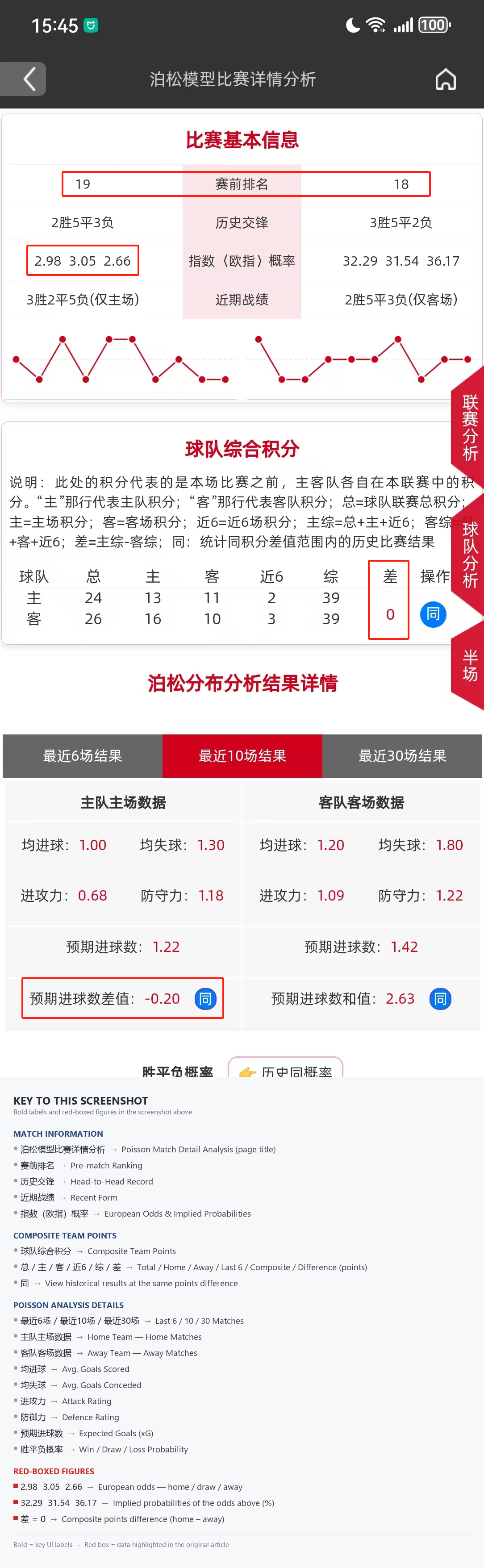
- European odds movements stay within the [232] pattern. The 1X2 odds (home win / draw / away win) and their movement consistently align with the [232] combination.
- The two teams' pre-match rankings are close. This signal tends to be stronger for teams sitting in the lower-to-mid table, and draws are statistically more likely around the middle of the season.
- The two teams' composite points are close. A gap within ±10 points counts as close. For finer calibration, cross-check the historical statistics table showing draw frequency at each points gap.
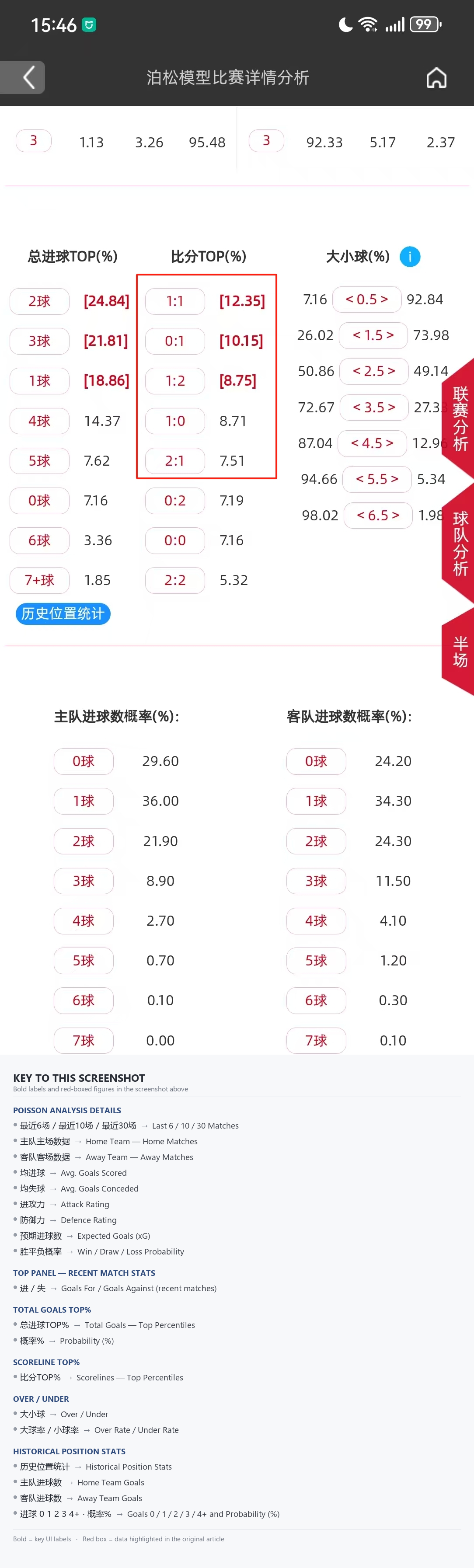
- The two teams' Poisson expected goals are close. A gap within ±0.5 goals counts as close. Again, the historical table of draw frequency at identical expected-goals gaps can serve as a reference.
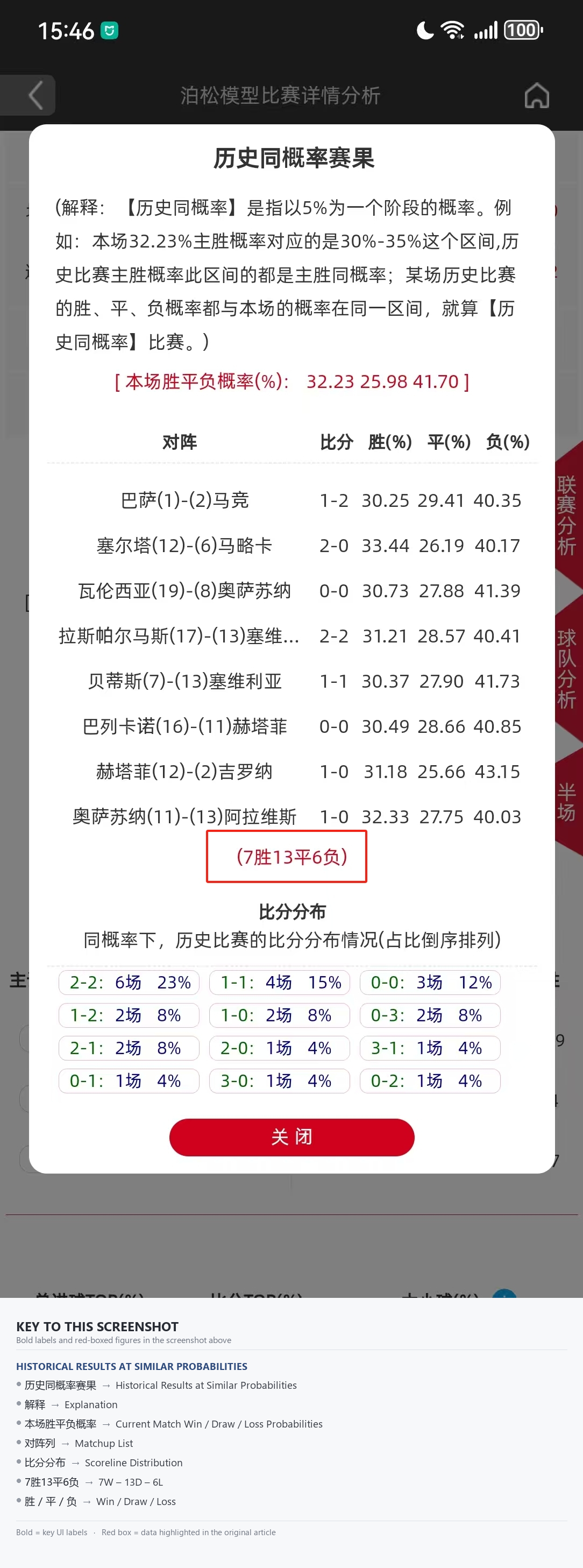
- Historical matches with a similar Poisson probability profile have produced draws. When the model outputs comparable win/draw/loss probabilities, check whether past matches at similar probability levels actually ended in draws.
- One or two draw scorelines appear near the top of the scoreline probability list. If the top 7 most probable scorelines include one or two draws, it further supports the draw hypothesis.
The screenshots below are taken from the Chinese Sports Lottery fixture of March 14, 2025 — Friday match No. 010, Las Palmas vs. Alavés. The data marked by the red boxes corresponds to the conditions listed above. The match was a near-perfect fit to the criteria, and the final result was indeed a draw. Feel free to cross-check the details yourself.
Disclaimer: Football matches have not yet been played, and any outcome is possible. This article does not describe an absolute prediction method — it is a probabilistic approach based on historical patterns. Whether you choose to reference it or use it for retrospective analysis is entirely at your own discretion.